The Man Who Can Still Liberate Mexico

Algunos políticos mexicanos incluso podrían estar reclamando la construcción de un muro fronterizo para impedir la entrada de todos esos californianos en busca de empleo.
¿Quién fue ese distinguido visitante que ofreció tan sabios consejos a los mexicanos en enero y febrero de 1942? No fue otro que Ludwig von Mises. Su obra cumbre, *La acción humana* (*Human Action*), irrumpió en el escenario mundial hace exactamente 70 años —esta misma semana de 1949—; es decir, siete años después de su primera visita a México. Sin embargo, ya en 1942, Mises contaba con más de dos prolíficas décadas de trayectoria a sus espaldas como un pensador perspicaz y de renombre internacional.
A mi juicio, Mises:
sigue siendo no solo el economista preeminente de la Escuela Austríaca, sino también una figura colosal dentro de la propia ciencia económica. Resulta un trágico descuido el hecho de que nunca se le concediera el Premio Nobel, un galardón que, en cambio, ha sido otorgado con frecuencia a individuos de menor perspicacia y trascendencia. Si tan solo el mundo hubiera sabido apreciar la brillantez y la exhaustividad con las que Mises desmanteló el socialismo hace casi un siglo, se habrían podido evitar millones de muertes prematuras e incalculables sufrimientos en las décadas subsiguientes. Cincuenta premios Nobel resultarían insuficientes para honrar debidamente a este hombre; pero, al fin y al cabo, el mundo en el que vivimos dista mucho de ser justo. Si todo sale según lo planeado,
Mises obtendrá el documental que se merece cuando *Mises the Movie* se estrene a finales de 2020. (Usted puede apoyar el proyecto mediante una contribución económica). Mientras me preparaba para una entrevista con los realizadores de la película la semana pasada, releí el libro de 1976 *My Life with Ludwig von Mises* (Mi vida con Ludwig von Mises), escrito por la esposa del gran economista, Margit. Un breve capítulo titulado «Dos meses en México» captó mi atención de una manera que no lo hizo cuando lo leí por primera vez hace más de 40 años; probablemente esto se deba a mi interés más reciente en América Latina y a mi participación en la emocionante nueva iniciativa: FEE en Español.
A medida que la embestida de Hitler engullía una nación tras otra durante el verano de 1940, Ludwig y Margit von Mises abandonaron Europa. Tenían sobradas razones para huir, dada la hostilidad de los nazis hacia la talla mundial de Ludwig como defensor de las ideas del liberalismo clásico, sus demoledoras críticas al socialismo y, por supuesto, su origen judío.
La historia de Montes de Oca
Durante el invierno siguiente, en Nueva York, la pareja se reunió con un caballero de la Ciudad de México a quien llegaron a profesar un inmenso afecto. Su nombre era el señor Luis Montes de Oca, un destacado funcionario bancario y exsecretario de Hacienda (entre 1927 y 1932) bajo el mandato de tres presidentes de la República. Margit escribió sobre él con admiración:
Aunque era de baja estatura, era un gran hombre y se comportaba como tal. Poseía un conocimiento exhaustivo de la política, la economía y los asuntos mundiales; hablaba cuatro idiomas con fluidez, era un lector voraz y conocía todo cuanto Lu había escrito jamás. De inmediato nos invitó a Lu y a mí a viajar a México para ofrecer una serie de conferencias en la universidad, las cuales él mismo patrocinaría.
En su libro de 2016, *The Origins of Neoliberalism in Mexico: The Austrian School* (Los orígenes del neoliberalismo en México: La Escuela Austríaca), María Eugenia Romero Sotelo cita a destacados mexicanos que conocieron personalmente a Montes de Oca, describiéndolo como «un enemigo de las intervenciones oficiales destinadas a influir en la economía nacional» y como «un hombre de extraordinaria cultura». Se oponía firmemente a los déficits presupuestarios del gobierno, consciente de que estos lastran al país con gastos y deudas de dudosa justificación.
Defendió con valentía la libertad y el capitalismo, y Mises era su héroe por haber hecho lo mismo. Montes de Oca creía que, en sus propias palabras, «la consecuencia inevitable» de la planificación centralizada e intervencionista era «la creación de condiciones perturbadoras que no resuelven el problema que se pretendía remediar, sino que, por el contrario, plantean otros que complican y empeoran la situación».
Fue una época maravillosa, en la que Lu impartió numerosas conferencias tanto en el ámbito universitario como en el público.
A juzgar por la descripción de Margit, Montes de Oca fue el anfitrión perfecto. La vida en los Estados Unidos durante el primer año, aproximadamente, tras la llegada de ella y de Lu a Nueva York, resultó difícil. El ánimo de Lu estaba por los suelos; no solo había perdido gran parte de sus bienes personales, sino también su Austria. La situación económica era precaria. Además del alemán, su segundo idioma era el francés, no el inglés.
Sin embargo —comenzando con una recepción en el aeropuerto de la Ciudad de México que «casi parecía digna de la realeza»—, los casi dos meses que la pareja pasó en México marcaron un punto de inflexión. Fue una época maravillosa, en la que Lu impartió numerosas conferencias tanto en el ámbito universitario como en el público.
VICTOR DAVID HANSEN
They followed the precedent set by America’s 1999 intervention in the distant Balkans, when it led a three-month NATO campaign to dismantle Slobodan Milosevic’s often bloody ambition to establish a Greater Serbia.
NATO members are not legally required to join another member’s military operation that isn’t formally sanctioned by the alliance or aimed at protecting the membership’s homelands.
But they often do just that.
Some NATO members joined the United States in Afghanistan and Iraq, on the theory that the Taliban and Saddam Hussein were dangers to all Western security in the post-9/11 environment.
NATO members are not legally required to join another member’s military operation that isn’t formally sanctioned by the alliance or aimed at protecting the membership’s homelands.
But they often do just that.
Some NATO members joined the United States in Afghanistan and Iraq, on the theory that the Taliban and Saddam Hussein were dangers to all Western security in the post-9/11 environment.
When NATO members in the past have operated unilaterally to defend their own national interests, they have often called on the United States, as NATO’s strongest member, for overt help.
For nearly 40 years, the US offered logistical, intelligence, reconnaissance, refueling and diplomatic support to the French in their postcolonial efforts to protect Chad from Libya and, later, Islamists.
During the 1982 Falklands War, a solitary Britain faced enormous logistical challenges in steaming halfway around the world to eject Argentina from its windswept and sparse islands.
American aid was critical to the effort: The United States stepped up to help with intelligence, reconnaissance, the supply of some 2 million gallons of much-needed gasoline and crucial restocking of Britain’s depleted Tomahawk missiles.
The assistance prompted anger from most Latin American nations of the shared Western hemisphere, as well as from many Hispanic American citizens at home.
No matter — President Ronald Reagan rightly saw the importance of solidarity with a NATO member and a longtime US ally. So he gave Britain a veritable blank check for Washington’s aid. Currently, President Donald Trump has not asked NATO members to help bomb Iran — even though Europe, not the US, was in range of Iran’s ballistic missiles, and soon perhaps nuclear-tipped ones as well.
Europeans are far more vulnerable to Iranian-inspired Islamic terrorism.
They are more reliant on oil from the Middle East, some of it passing through the Strait of Hormuz.
All the US had initially requested was basing support in disarming a common Western enemy that, for nearly half a century, has slaughtered American diplomats and soldiers and tried to kill an American president and secretary of state.
But most NATO members could not even offer tacit help.
Some damned the US effort as either illegal or unnecessary.
The American public watched the British waffle for days over permitting the US to use their Diego Garcia airbase.
The Spanish banned American use of their NATO bases and airspace.
The Italians refused a request from American bombers to land and refuel at a Sicilian NATO base.
Many NATO heads of state rebuked the United States to their domestic audiences while, in typical two-faced fashion, publicly offering empty verbal support for the US campaign.
The NATO response to an Iranian missile aimed at fellow NATO member Turkey was anemic.
Even worse was the pathetic British reaction to another Iranian missile launched at a British base at Akrotiri, Cyprus.
Yet neutering a theocratic Iran is clearly of benefit to Europe.
So is preventing the international waters of the Strait of Hormuz from becoming a tollbooth run by the Iranian regime.
Such passivity stood in sharp contrast to the five-year-long Ukraine War on Europe’ border.
Ukraine is not a NATO member. Nonetheless, Europeans made urgent requests for the US to honor the spirit of NATO solidarity and help protect Europe’s territorial integrity.
Yet continental Europe is not intrinsically weak. The combined population of the European Union and European NATO members is around 450 million — more than 100 million greater than that of the United States.
These same European nations enjoy an aggregate annual GDP of more than $22 trillion, 10 times the size of the Russian economy.
European diffidence comes on top of Trump’s perennial effort to harangue NATO members into honoring their commitments to spend 2% of GDP on defense — especially in the case of deadbeat Spain and Canada, which for years have welched on their pledges.
Trump’s rhetoric is not what has undermined NATO.
Instead, he ripped off a happy-face scab and exposed a festering wound of increasingly anti-American hypocrisy beneath.
If you wanted to wreck the alliance, there would be no better way than to follow the duplicitous example of Western Europe’s NATO members.
NIETZSCHE Y SCHOPENHAUER CONTRA OPRESION
Ricardo Valenzuela
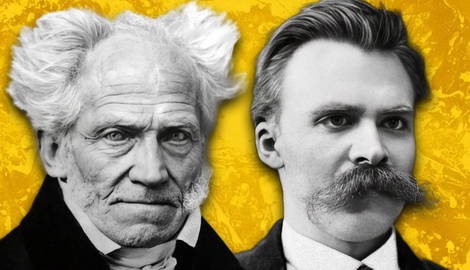
En el apocalipsis a la puerta con una humanidad que, como lo definiera Nietzsche, caería al profundo pozo de ese Nihilismo con la pérdida total de los valores que la habían regido, lo que identificaba como un despilfarro total de fuerzas que nada redituaban y el peligro más grande para la humanidad. A la campanada de Nietzsche le sumo otro filósofo tan agresivo y odiado como el primero, Schopenhauer, a quien se llegaría a conocer como el abanderado de la filosofía del dolor. Un hombre que había descendido a las profundidades del sufrimiento y lo mapeaba.
Pero, esos títulos que le asignaban eran injustos, pues al haber disectado ese dolor en algo desconocido por mucha gente, él llegaría a construir remedios efectivos. Habiendo nacido en la riqueza, no lo privaba de darse cuenta de las vidas de tanta gente que sufría. Y desde su niñez asumía algo anormal para su edad, una soledad en donde se enfrentaba con esa realidad, que luego se transformaba en sus profundos análisis detectando que los seres humanos cargaban el dolor de no tener lo que querían. Pero, al conseguirlo, se evaporaba muy rápido y así surgía el siguiente deseo en un fenómeno repetitivo.
Suscribirse a:
Comentarios (Atom)
500 AÑOS DE LA ESCUELA DE SALAMANCA – LEÓN GÓMEZ RIVAS –
500 AÑOS DE LA ESCUELA DE SALAMANCA – LEÓN GÓMEZ RIVAS – Seguro que la mayoría de los lectores de esta web del Centro Diego de Covarr...

-
Ricardo Valenzuela El día de ayer, ante mi queja por las salvajes “protestas” que ya en estos momentos están destruyendo California,...
-
Ricardo Valenzuela A finales de los años 60, después de haber permanecido cinco en Monterrey asistiendo al Tecnológico, me preparaba...
-
Ricardo Valenzuela “EU es un país libre, rico y próspero porque sus habitantes son hombres morales. Pero, si algún día abandonan esa moral...


